The short answer
- Only a handful of brands are genuine. For toxin, that means Botox, Dysport, Xeomin or Bocouture, Azzalure, Nabota and Jeuveau. For hyaluronic acid filler, it means Juvederm, Restylane, Teosyal, Belotero and Stylage.
- They are all prescription products. No genuine toxin or filler is sold over the counter or injected by a non-doctor in a home, hotel or salon.
- The brand differences are small. Toxins vary mainly in onset and diffusion, and HA fillers in thickness and lift. None of the reputable products is dangerous when it is genuine and correctly used.
- Provenance is the real safety issue. A regulator has warned that counterfeit and mishandled botulinum toxin has caused serious harm. The danger is rarely the brand and almost always a fake, an unapproved import or bad storage.
- You can protect yourself in a minute. See the sealed, labelled, refrigerated product before it is injected, and confirm the clinic and doctor are licensed first.
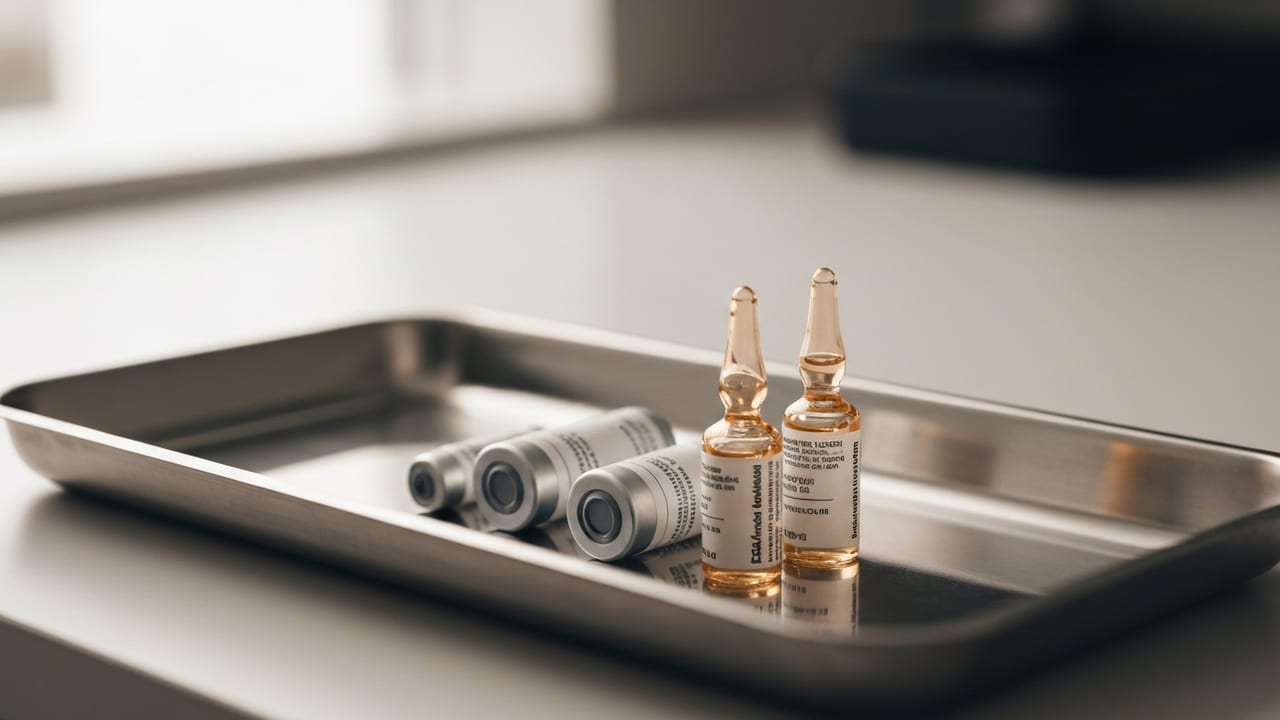
When people research injectables, they spend hours comparing brands and almost no time on the one question that decides whether the treatment is safe: is the product in that syringe genuine, approved, and stored correctly? That is the question that matters most, because the biggest risk in aesthetics is not choosing Dysport over Botox. It is a counterfeit or unapproved product, or a genuine product that has been left unrefrigerated or drawn from an unlabelled vial by someone who is not a doctor.
This guide does two things. First, it lists the botulinum toxin and dermal filler brands you can reasonably expect to encounter in a licensed UAE clinic, so you know what a legitimate menu looks like. Second, and more usefully, it explains how these products are regulated in the UAE and the concrete steps that let you confirm your clinic is using the real thing. If you want the broader picture on how these two treatments differ, our Botox vs fillers guide covers that ground.
Why the brand and its provenance matter
A genuine injectable, handled by a licensed clinic, is the baseline for safety. Everything else, the injector's skill, the aftercare, the result, is built on top of that baseline. Remove it and nothing else can compensate.
Counterfeit and unapproved products are not a theoretical worry. Fake botulinum toxin has been found in circulation, sometimes in packaging designed to imitate the real brand, and it can contain the wrong dose, the wrong substance, or contamination. Because botulinum toxin is one of the most potent biological substances known, an incorrectly formulated or mishandled vial is genuinely dangerous, not merely ineffective. Counterfeit fillers carry a parallel risk: unknown gels of unverified composition have been linked to granulomas, infection and lasting disfigurement in the medical literature.
The important mental shift is this. You are not really choosing between good and bad brands. The reputable products below are all safe when they are genuine. You are choosing between a verified supply chain and an unverified one. That is why the second half of this guide, on how to check, matters more than any brand comparison.
The genuine botulinum toxin brands
Every product in this category is a form of botulinum toxin type A, a prescription-only medicine. What differs between them is subtle: how quickly the effect appears, how far the product tends to spread from the injection point, and the exact dosing units, which are not interchangeable between brands. A skilled injector chooses based on the area and your anatomy, not because one is a premium tier and the rest are budget.
| Brand | Manufacturer | Notes |
|---|---|---|
| Botox / Botox Cosmetic | Allergan (AbbVie) | The original and most recognised botulinum toxin type A. The name most patients ask for by default. |
| Dysport | Galderma | Tends to have a slightly faster onset and a wider spread, which some injectors prefer for larger areas. |
| Xeomin / Bocouture | Merz | A purified toxin with no complexing proteins. Bocouture is the aesthetic branding of the same molecule. |
| Azzalure | Galderma / Ipsen | The aesthetic-market presentation of the same toxin family as Dysport, used for facial lines. |
| Nabota / Jeuveau | Daewoong / Evolus | Newer type A toxins that have gained regulatory approval in several markets. Jeuveau is Nabota under a different brand. |
A few things follow from this. Because the dosing units differ between brands, a clinic quoting you "per unit" should tell you which product it is pricing, since a unit of one is not equal to a unit of another. And because all of these are prescription medicines, none should ever be offered casually or sold as a quick add-on by someone who is not a licensed doctor. If you want the treatment-specific detail on what toxin does and does not do, see our Botox in Dubai hub.
The genuine dermal filler brands
Almost all reputable fillers used in the UAE are hyaluronic acid gels. Hyaluronic acid is a sugar your body already produces; the filler is a cross-linked, sterile gel version of it. The reason this class is preferred is that a genuine HA filler is, in the rare event of a problem, dissolvable with an enzyme. That safety net only exists if the product is real and you know what was injected.
| Brand | Manufacturer | Notes |
|---|---|---|
| Juvederm | Allergan (AbbVie) | A broad range with different gels for lips, cheeks and jawline. Among the most widely used in the region. |
| Restylane | Galderma | An extensive family of HA gels, including firmer products for structural lift and thinner ones for fine work. |
| Teosyal | Teoxane | A Swiss HA range known for a wide selection tuned to specific facial zones. |
| Belotero | Merz | HA gels often chosen for softer, more superficial placement and fine lines. |
| Stylage | Vivacy | A French HA range formulated with an added antioxidant, used across facial areas. |
With filler, the single most important thing is that the product is sealed and traceable. A genuine syringe comes in tamper-evident packaging carrying a batch number and expiry date, and most ranges include a peel-off traceability label. A conscientious clinic sticks that label into your record so there is a documented trail of exactly what went into your face. If you ever need the filler dissolved or you have a reaction, that record is what tells the treating doctor what they are dealing with. For treatment-specific pricing and product context, see our lip fillers and cheek fillers pages, or the full UAE aesthetic price guide.
How UAE regulation actually works
Botulinum toxin and dermal fillers sit in two regulated categories: toxin as a prescription medicine, and most fillers as medical devices or medicines depending on their classification. Registration and import into the country are controlled at federal level. The Ministry of Health and Prevention, working through the Emirates Drug Establishment, is responsible for registering medicines and authorising their import, which means a legally supplied product has cleared a federal approval process before it ever reaches a clinic fridge.
Separately from the product, the clinic and the injector are licensed by the health authority in the relevant emirate. In Dubai that is the Dubai Health Authority (DHA); in Abu Dhabi it is the Department of Health (DOH); MOHAP licenses facilities in several other emirates. These authorities set the standards for how a clinic must store, handle and administer injectables, including cold-chain storage for toxin and the requirement that a licensed doctor performs the injection.
As a consumer, you cannot easily search a public database to confirm that the exact vial in front of you is an approved, imported batch. That information sits with the regulator and the clinic, not on a public lookup you can run at the chair. This is precisely why the practical, visible checks below matter more than trying to verify a product code. You confirm safety by confirming the clinic, the doctor and the sealed product, not by auditing an import record you have no access to.
How to spot a fake and protect yourself
You do not need to be a pharmacist to protect yourself. The signals of a legitimate product and a legitimate setting are visible, and you are entitled to ask for every one of them before anyone injects you.
- See the sealed, labelled box or vial. Ask which brand it is and ask to see the packaging opened in front of you. Genuine product carries a batch number, an expiry date and, on fillers, a traceability label.
- Check that toxin is refrigerated. Botulinum toxin requires cold-chain storage. Product pulled from a drawer at room temperature, or reconstituted long in advance, is a warning sign.
- Refuse product from an unlabelled syringe. Reconstituted toxin drawn from an anonymous syringe, with no box and no way to confirm the brand or batch, is a red flag. You should be able to link what is injected to a real, sealed source.
- Be suspicious of prices far below market. A genuine vial has a genuine cost. An offer that is a fraction of the normal price usually means an under-dose, an unverifiable product, or corners cut on the doctor and storage.
- Confirm the injector is a licensed doctor. These are prescription treatments. A nurse or therapist may assist but should not be independently injecting you.
- Confirm the clinic is licensed. It must hold a DHA, DOH or MOHAP licence for its emirate. A compliant clinic never objects to being checked.
- Never accept injectables in a home, hotel or salon. Legitimate toxin and filler are administered in a licensed medical facility, full stop. A "house call" injectable is outside the safety framework entirely.
If a clinic hesitates on any of these, that hesitation is your answer. A clinic using genuine product in a compliant setting has nothing to hide and every reason to show you the box, because it is proof of the quality you are paying for. For the exact steps to verify a licence, follow our walkthrough on how to check a clinic is DHA licensed, and for the broader economics of why bargain injectables are risky, read the dangers of cheap fillers in the UAE.
What regulators have warned about
This is not a hypothetical concern raised to sell you a premium clinic. In 2024 the US Food and Drug Administration issued a safety communication after people were harmed by counterfeit or mishandled botulinum toxin, including product administered in non-medical settings and by unlicensed individuals. Some of those affected developed symptoms consistent with the toxin spreading beyond the injection site, and cases required medical attention. The specifics of that alert relate to the United States, and we are not claiming an identical event has been documented in the UAE. The principle, though, travels: the harm came from fake or badly handled product and unqualified injectors, exactly the failures the checks above are designed to catch.
The medical literature on fillers tells a consistent story. Reviews of filler complications describe the worst outcomes clustering around unverified products and untrained injectors, with counterfeit or unknown gels linked to infection, chronic inflammation and disfigurement. Where a genuine HA filler can usually be dissolved if something goes wrong, an unknown gel of uncertain composition may not respond to the same rescue, which is another reason knowing exactly what was injected matters so much. We are describing these risks in general terms on purpose. Rather than invent a specific batch recall or a local case number, the honest and useful point is the pattern: verified product plus licensed clinic is safe; the fakes and the shortcuts are where people get hurt.
Your pre-injection checklist
Bring this short list to your consultation. None of it is confrontational; a good clinic will happily walk you through every point.
- Which brand am I getting? You should get a specific name from the lists above, not a vague "premium toxin".
- Can I see it sealed? The box or syringe should be opened in front of you, with a visible batch number and expiry.
- Who is injecting me, and are they a licensed doctor? Ask, and cross-check on the authority's registry.
- Is the clinic licensed for this emirate? DHA, DOH or MOHAP, verifiable before you book.
- Does the price make sense? Far below market is a question to ask, not a bargain to grab.
If working through all of this alone feels like a lot, that is exactly what we are here for. Tell us your treatment and your area of the UAE, and we will match you with licensed clinics that use genuine, approved brands and are happy to prove it.